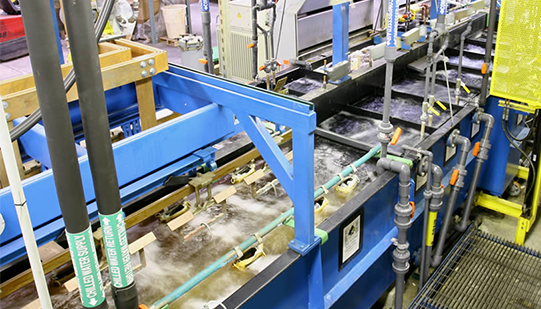
Metal finishing operations can create multi-media contamination (soil, groundwater, and sometimes vapor intrusion) from constituents such as hexavalent chromium, nickel, cadmium, copper, zinc, lead, cyanide, acids/caustics, and—at some facilities—chlorinated solvents used for degreasing and PFAS for mist/fume suppression.
Historic releases often originate from process areas and subsurface infrastructure: floor cracks, process trenches, sumps, clarifiers, tank pads, sewer laterals, and former UST/AST locations. These are routinely implicated during regulatory investigations and property transactions.
Once constituents reach groundwater, impacts may migrate beyond the property boundary, increasing regulatory scrutiny and potentially creating third-party exposure (neighbors, utilities, redevelopment partners, or downstream receptors).
Investigation, interim measures, and cleanup commonly require multiple phases (site characterization, risk evaluation, remedy selection, implementation, monitoring, and closure documentation). Costs can range from hundreds of thousands to multiple millions depending on plume extent, receptors, and remedy complexity.
Plating sites may be overseen by DTSC, the Regional Water Quality Control Boards (RWQCBs), and/or local agencies. Remedy decisions are increasingly driven by risk, vapor intrusion screening (where solvents are present), and long-term protectiveness.
Genesis has a focused practice supporting California plating/finishing facilities and related industrial properties for over 20 years. We understand the operational realities, the typical release mechanisms, and the regulator expectations for chromium, cyanide, metals, and PFAS, and solvent-impacted sites.
Many plating and finishing facilities operated during periods when liability insurance coverage was materially different than it is today. When conditions align, Genesis can help fund investigation and cleanup by identifying and activating historical insurance assets—often pre-1986 CGL and/or property policies—so clients can address environmental liabilities with little to no out-of-pocket cost.
We manage the full lifecycle: initial file review and strategy, targeted sampling (as needed), regulator engagement, technical reporting, remedy implementation, and pursuit of regulatory closure—coordinating all stakeholders to keep the project moving.
Genesis integrates environmental technical work with historical insurance-asset strategy (including insurance archaeology and coordinated tender support with specialized counsel, when appropriate). The objective is straightforward: secure funding, execute the work, and close the liability.
We prioritize practical field execution, clear communication, and schedule discipline—aiming to minimize disruption, control reputational risk, and protect property value.
Genesis is your One-Stop shop to manage your environmental liabilities, regulatory compliance, and permitting. We understand that California platers generally need an integrated EHS compliance program that include:
You may be a strong fit for Genesis’ program if one or more of the following apply: